


Gallium and germanium are hardly visible in finished products.
Nevertheless, they form an important foundation for numerous technologies that are crucial to digitalisation, communication, energy efficiency and modern industrial processes.
Gallium-based compound semiconductors enable high-performance high-frequency components, LEDs, lasers and power electronics.
Germanium is used, amongst other things, in optical fibres, infrared optics, specialised semiconductors and highly efficient solar cells.
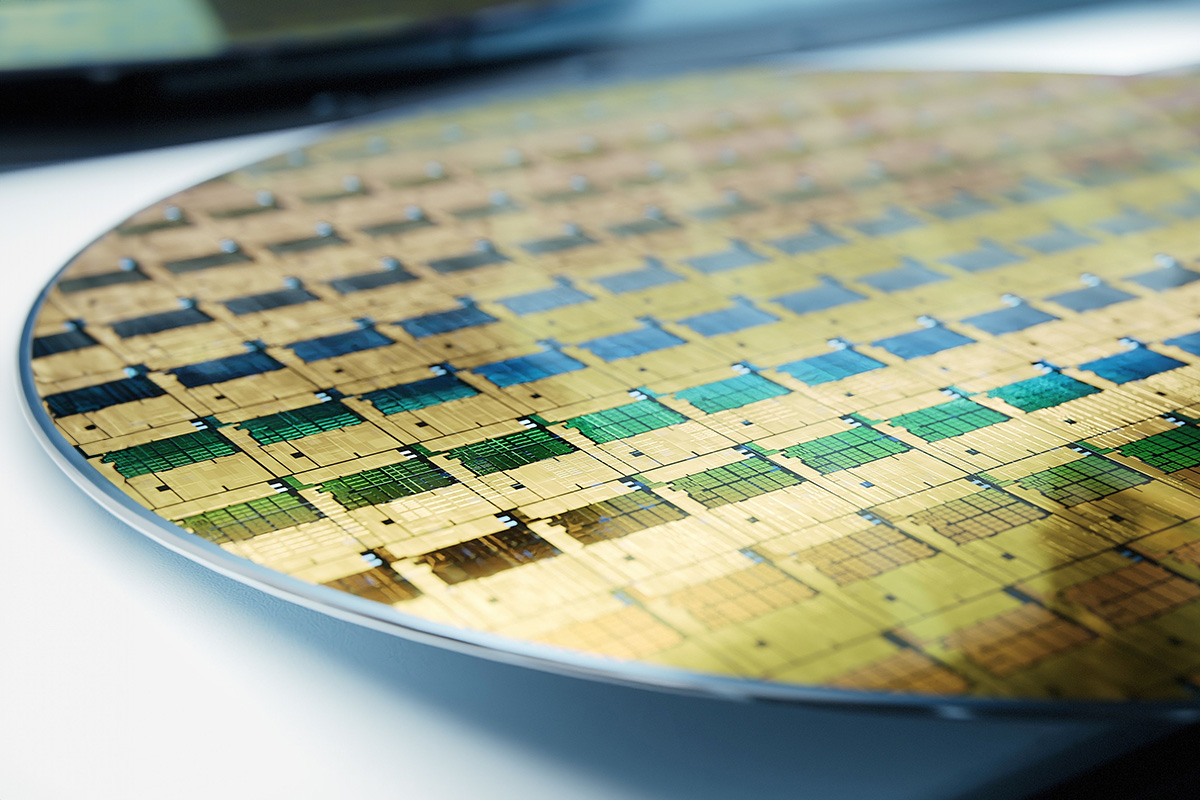
At the same time, the global semiconductor market is growing strongly. According to World Semiconductor Trade Statistics, global semiconductor sales are set to reach around 795.6 billion US dollars.
This represents growth of 26.2 per cent compared with the previous year. Demand from data centres, AI infrastructure and logic and memory applications grew particularly strongly.
Gallium and germanium do not benefit equally from all segments of the semiconductor market. Their significance lies primarily in specialised components where silicon alone cannot provide the desired electrical, optical or thermal properties.
Added to this is a high degree of strategic dependence. Gallium and germanium are classified by the European Union as both critical as well as strategic raw materials classified.
Production and refining are heavily concentrated in a small number of countries. Consequently, supply chains, purity, material form, traceability and long-term availability are becoming increasingly important for industrial buyers and developers.
NMD Metalpowders stocks gallium, germanium and other specialised materials in the category Technology metals in powder form.
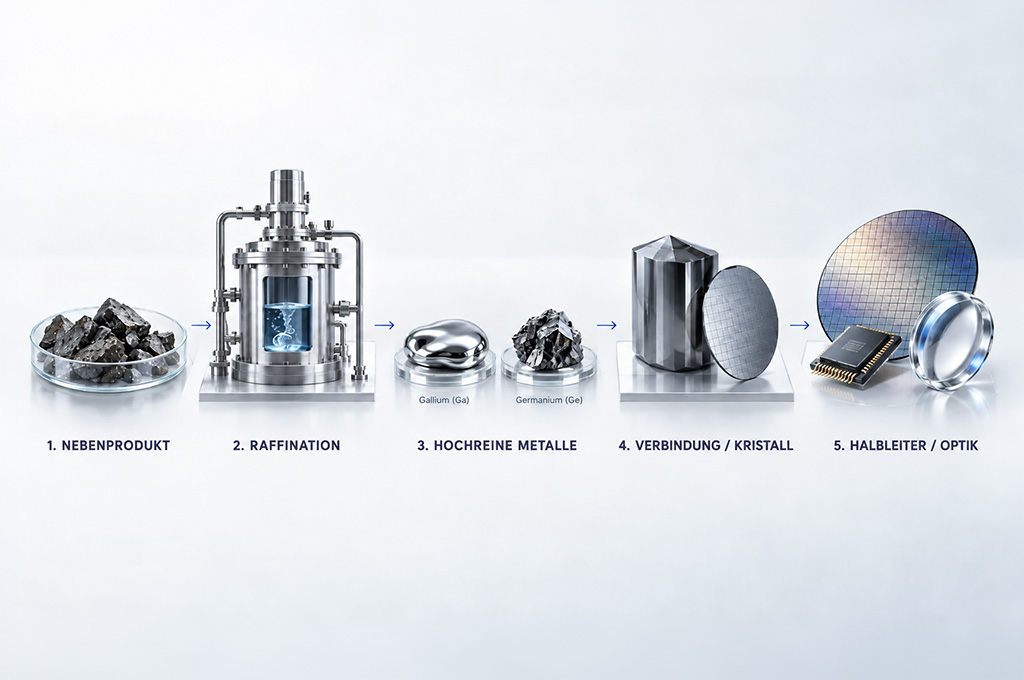
The following article explains the roles that gallium and germanium play in modern technologies, why they are not direct alternatives to one another, and why a distinction must be made between pure metal, powder, chemical compounds, crystals and wafers when procuring them.
Key points at a glance:
- Gallium and germanium are not rare earths, but distinct technological metals.
- Both are classified as critical and strategic raw materials within the EU.
- Gallium is primarily used in compound semiconductors such as gallium arsenide and gallium nitride.
- Germanium is used, amongst other things, in fibre-optic technology, infrared optics and specialised semiconductors.
- Gallium and germanium serve different purposes and are not direct alternatives.
- The fact that an element is listed in a component does not necessarily mean that pure metal powder is required.
- The form of the material, its purity, composition and documentation must be clearly defined before an enquiry is made.
Europe’s semiconductor industry: between growth and raw material risks
AI, data centres and power electronics are driving the semiconductor market
Semiconductors form the basis of modern computers, communication systems, vehicles, energy technology and industrial automation.
As AI applications, cloud infrastructure and data centres continue to expand, the demands on computing power, data transmission and energy efficiency are increasing.
The World Semiconductor Trade Statistics reports global semiconductor turnover of around 795.6 billion US dollars for 2025.
The market volume thus grew by 26.2 per cent. The computer sector expanded by more than 60 per cent, driven in particular by investment in data centres and AI platforms.
This growth is driving up demand for a variety of semiconductor materials. Silicon remains the industry’s dominant base material.
However, compound semiconductors and specialised materials are used in certain high-frequency, power, lighting and sensor applications.
Gallium, for example, is a component of:
- Gallium nitride for power electronics and high-frequency technology
- Gallium arsenide for optoelectronic and high-frequency applications
- other gallium-based compounds for LEDs, lasers and photovoltaics
Germanium is required, amongst other things, for:
- Fibre-optic cables and optical communication networks
- Infrared optics and sensors
- Silicon-germanium semiconductor
- Substrates for specialised solar cells
- High-purity detectors and electronic components
Both raw materials therefore benefit from the growing demand for high-performance electronics, without single-handedly determining the entire semiconductor market.
Why gallium and germanium are strategically important for Europe
The European Union includes gallium and germanium on its list of critical raw materials.
Furthermore, both belong to the core group of strategic raw materials that are particularly important for digital technologies, energy applications and other high-tech sectors.
The classification takes several factors into account:
- great economic significance for specialised technologies
- high concentration of production and refining
- limited short-term substitution options in certain applications
- Comprehensive evaluation of alternative materials and suppliers
- Dependence on by-product streams from other raw materials industries
Substitution is not ruled out in principle. However, it may require changes to the component design, manufacturing process, performance or type approval. Particularly in the case of highly specialised components, materials cannot therefore be substituted at short notice solely on the basis of price or availability.
You can also find suitable metal powders and other materials for electronic applications in the NMD application area Semiconductors and electronics as well as on the industrial side Metal powder for electrical engineering.
Concentrated production meets specialised demand
The geological availability of a raw material is not the same as its short-term availability in a high-purity, industrial-grade form. In the case of gallium and germanium, refining, purification, further processing and qualification are particularly crucial.
According to a recent analysis by the U.S. Geological Survey, in 2023 the figures were approximately:
- 98 per cent of global primary production of refined gallium and
- 77 per cent of global production of refined germanium
on China. As a result, changes to export regulations, production capacity or administrative approvals can have a significant impact on international supply chains.
For industrial projects, therefore, it is not simply a question of whether gallium or germanium is generally available. The decisive factor is whether the required:
- Material form,
- Purity class,
- chemical composition,
- Particle size,
- Packaging and
- Documentation
can be procured on a long-term basis and in a high-quality form.
Classifying gallium and germanium correctly
Gallium and germanium are not rare-earth elements
Gallium and germanium are often mentioned in the same breath as rare-earth elements or other critical raw materials. Chemically, however, they do not belong to the rare-earth element group.
- Gallium is a metal in the boron group with the chemical symbol Ga.
- Germanium is a semimetal with pronounced semiconductor properties and the chemical symbol Ge.
The term „technology metals“ describes their importance for modern industrial and high-tech applications. However, it does not refer to a single class of chemical substances.
Pure metal, powder, compound or crystal?
In the case of gallium and germanium, the required form of the material is particularly important. Simply stating the name of the element is not sufficient for a technical enquiry.
Gallium may, for example, be required as:
- high-purity metallic gallium
- Gallium powder or a specific gallium-containing formulation
- Gallium arsenide
- Gallium nitride
- Gallium phosphide
- A constituent of an alloy
- Raw material for coatings or thin films
- Wafer or crystalline semiconductor material
Germanium can be found, amongst other forms, as:
- high-purity germanium metal
- Germanium powder
- germanium dioxide
- Germanium tetrachloride
- Silicon-germanium alloy or semiconductor layer
- Single crystal
- Wafer or substrate
- finished optical component
The different types of material are not interchangeable. They possess different chemical, electrical, optical and processing properties.
Why the delivery format is crucial for procurement and development
An incorrect or incomplete material specification can lead to unsuitable quotations and unnecessary sampling as early as the initial stages of a project.
The following factors, amongst others, are relevant to the selection process:
- Function in the end product: Semiconductors, doping, alloying, coating, optics or raw materials
- Chemical form: Element, compound, oxide, chloride or alloy
- Physical state: solid, liquid, powder, crystalline or in wafer form
- Purity: metallurgical, optical or electronic quality
- Particle size distribution: provided that powder is actually required
- Packaging: Protection against oxidation, moisture and contamination
- Documentation: Test certificate, batch, origin and traceability
Gallium has a very low melting point of around 29.8 °C. Its physical state can therefore change even at temperatures close to normal room and storage temperatures.
When enquiring about gallium powder, it is therefore essential to clearly specify the temperature range, stabilisation, packaging and exact form of delivery.
What role does gallium play in the semiconductor industry?
Gallium is not generally used as a pure metal in electronic components. Its main technological significance lies in compound semiconductors such as gallium arsenide and gallium nitride.
The U.S. Geological Survey points out that, in the USA, gallium is predominantly processed in the form of GaAs, GaN and GaP wafers, as well as in epitaxial layers.
Gallium nitride for power electronics
Gallium nitride, or GaN for short, is one of the wide-bandgap semiconductor materials. With appropriate component design, this class of material can enable high voltages, fast switching and high power densities.
GaN is used or being developed for, amongst other things:
- Power transistors
- compact power supplies
- Chargers and current transformers
- Engine control systems
- Data centres
- High-frequency technology
- Industrial power electronics and power control electronics
The advantage does not stem solely from the material. Component design, substrate, manufacturing, cooling, packaging and control all combine to determine the actual performance.
GaN does not, therefore, replace silicon across the board. It complements existing semiconductor technologies in areas where its unique properties offer a technical or economic advantage.
Gallium arsenide for high-frequency applications and optoelectronics
Gallium arsenide, or GaAs for short, is a compound semiconductor with a direct bandgap. This makes it particularly suitable for the conversion between electrical energy and light, as well as for selected high-frequency applications.
Typical applications include:
- Lasers and light-emitting diodes
- Photodetectors
- High-frequency amplifier
- Communication systems
- specialised integrated circuits
- high-quality solar cells
GaAs and GaN are both made from gallium compounds, but they serve different purposes.
GaAs is particularly relevant for optoelectronic and high-frequency applications, whilst GaN is heavily used in power and high-frequency electronics.
Gallium in LEDs, lasers and photovoltaics
Compounds containing gallium play an important role in the generation, processing and detection of light.
These include:
- LEDs for lighting and displays
- Laser diodes for communications and measurement technology
- Photodetectors
- optoelectronic sensors
- Multi-junction solar cells for specialised high-performance applications
- CIGS thin-film solar cells containing copper, indium, gallium and selenium
However, the importance of gallium in these applications should not be equated with the direct use of gallium powder in the finished component. High-purity compounds, wafers or precisely deposited layers are often required.
You can find further related areas of application on the NMD page on metal powders for the Power generation.
When metallic gallium or gallium powder may be relevant
Metallic gallium, or a specific powdered form, may be of particular relevance as a raw material or functional material.
Possible areas of application include:
- Production of gallium-containing compounds
- low-melting-point alloys
- liquid metal systems
- thermal interface materials
- Materials research
- metallurgical processes
- specialised coating and material concepts
The most suitable form of supply depends on the processing temperature, purity, composition and process.
The product page for Gallium powder from NMD Metalpowders This serves as an initial overview. Availability and specific details will be assessed on a project-by-project basis.
What role does germanium play in photonics and semiconductor technology?
Germanium possesses both semiconductor and unique optical properties. Whilst silicon has largely replaced germanium in many conventional electronic components, it remains of great importance in specialised applications.
The U.S. Geological Survey cites fibre-optic communications, infrared optics, electronic and solar applications, and polymerisation catalysts as key areas of application.
Germanium in fibre-optic technology
In optical fibre, non-metallic germanium powder is not typically processed directly. Instead, a germanium compound is used as a precursor.
A common process uses germanium tetrachloride, which is oxidised to form germanium dioxide. The germanium dioxide is added to the glass core, altering its refractive index relative to that of the surrounding cladding.
This allows light to be guided in a controlled manner through the core of the fibre. Glass fibres containing germanium are therefore important for:
- Telecommunications networks
- Data centres
- Broadband infrastructure
- industrial data networks
- Sensor and laser systems
The expansion of data-intensive applications is increasing the economic importance of high-performance optical networks.
However, this does not imply a direct demand for germanium powder in every fibre-optic application. What is required is the appropriate chemical precursor and purity grade for each specific application.
Germanium for infrared optics and sensor technology
Germanium is transparent to light in key regions of the infrared spectrum. This makes it suitable as a raw material for optical components that do not necessarily need to transmit visible light.
Areas of application include, amongst others:
- Thermal imaging technology
- industrial process monitoring
- Building and plant diagnostics
- Infrared spectroscopy
- Gas and temperature sensors
- Research and measurement systems
Germanium crystals, lenses, windows or coated optical components are often required for such applications.
Metal powder may be a raw material within an upstream manufacturing chain, but it is not to be equated with the finished optical component.
Silicon-germanium and special-purpose semiconductors
Silicon-germanium, or SiGe for short, combines silicon and germanium in a single semiconductor material. By adjusting its composition, its electronic properties can be specifically modified.
SiGe is used, amongst other things, for selected applications in:
- High-frequency electronics
- Communications technology
- analogue and mixed-signal circuits
- Sensors
- advanced microelectronics
researched and implemented.
Semiconductor manufacturing requires extremely high levels of purity and precisely controlled impurity levels.
The National Institute of Standards and Technology specifically identifies germanium and GeSi as high-purity starting materials, for which total impurities and critical contaminants must be reliably characterised.
Germanium in solar cells and special-purpose glass
Germanium also serves as a substrate material for selected high-efficiency multi-junction solar cells. Such systems are used in applications where high power output per unit area or specific operating conditions are more important than a low material cost.
Further applications can be found in:
- speciality optical lenses
- Detectors
- Radiation and X-ray spectroscopy
- high-purity electronic components
- Research and material development
The various applications require different forms of germanium and different purity grades.
When germanium powder may be useful
Germanium powder may be of relevance as a metallic raw material or functional material for selected industrial and scientific processes.
Possible areas of application include:
- Alloy and Materials Development
- Pressing and sintering processes
- Coatings
- Evaporation and separation processes
- Production of germanium-containing compounds
- Research and prototype development
When making an enquiry, it is particularly important to specify purity, grain size, morphology, oxidation state and packaging.
Further information can be found on the NMD product page for Germanium powder.
A direct comparison of gallium and germanium
Gallium and germanium are often regarded together as critical technology metals. However, their chemical and technical properties differ significantly.

Gallium and germanium belong to the same strategic raw materials cluster, but fulfil different functions. The choice depends on the specific component, the chemical compound and the desired electrical or optical property.
Why the supply chains for gallium and germanium are so sensitive
Both raw materials are often produced as by-products
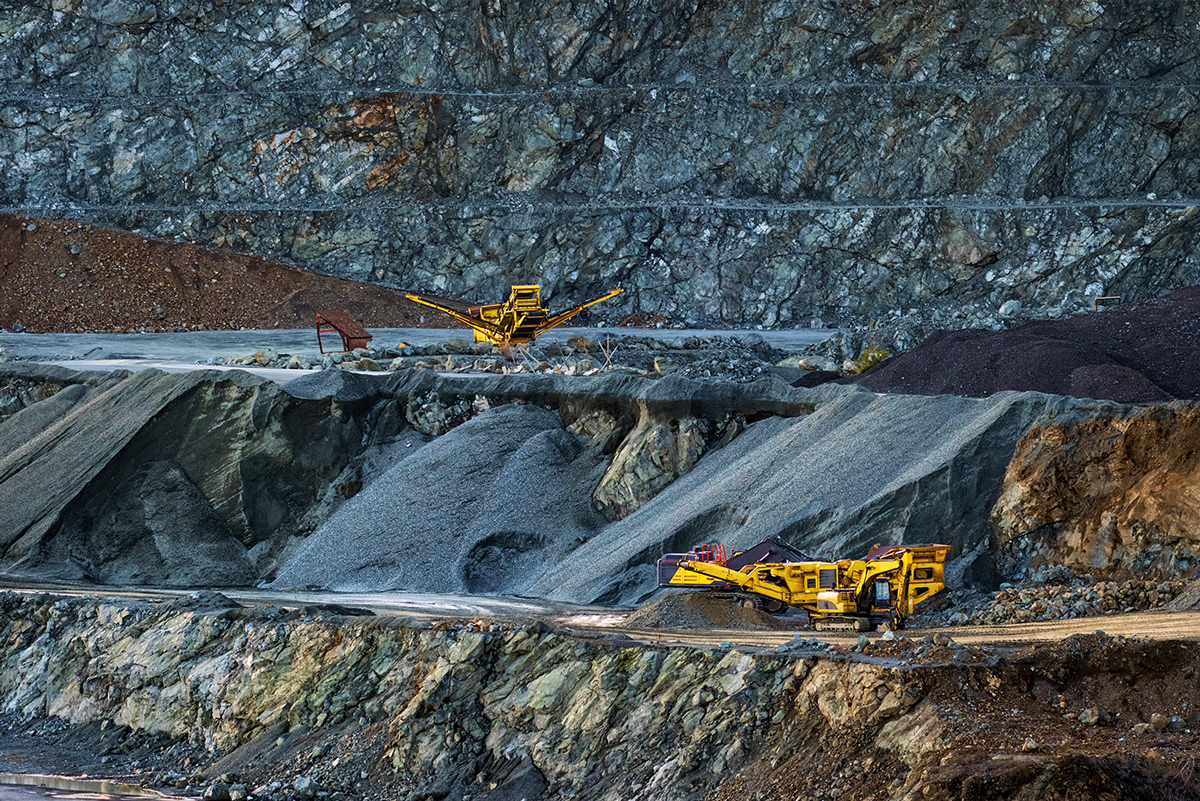
Gallium and germanium are generally not extracted from dedicated mines. They are often produced as by-products of other mineral processing operations.
Gallium is mainly extracted from:
- Bauxite flows in aluminium production
- in some cases also from residues from zinc processing
Germanium is extracted in particular from:
- zinc ores containing germanium and residues from zinc processing
- certain copper and other raw material flows
- Recycled materials
Production cannot therefore be increased in the short term simply because of higher prices for gallium or germanium. It also depends on the extraction and processing of the relevant key raw materials, as well as on suitable recovery facilities.
High concentration during production and processing
Geologically speaking, gallium and germanium are not found exclusively in China. The key concentration lies primarily in production, recovery and refining.
The U.S. Geological Survey shows that, for 2023, China’s share stands at 98 per cent for primary refined gallium and 77 per cent for refined germanium.
This concentration increases susceptibility to:
- Production stoppages
- Export and licensing requirements
- administrative delays
- Price fluctuations
- limited short-term alternatives
New suppliers or materials also often have to undergo technical qualification. This approval process can be time-consuming, particularly in the case of semiconductor, optical and coating processes.
Export controls increase the need for planning
On 1 August 2023, China introduced export controls on certain gallium- and germanium-related materials.
According to the Chinese Ministry of Commerce, this is not a general export ban. Exports may be authorised provided that the relevant regulatory requirements are met.
Nevertheless, this gives rise to additional planning considerations for businesses:
- Licensing and authorisation processes
- Verification of end-users and end-uses
- extended or variable delivery times
- stricter documentation requirements
- possible changes to the political framework
Procurement should therefore not be based solely on the current price.
Delivery times, sources of supply, replacement and alternative material forms must also be taken into account.
You can find out more about this topic in the NMD technical article on the Impact of global supply chains and raw material risks on metal powder procurement.
Europe’s response to its dependence on raw materials
The European Union is pursuing several objectives through the Critical Raw Materials Act:
- greater diversification of supply sources
- Development of European processing and refining capacity
- higher recycling rates
- faster approval of strategic projects
- less dependence on individual third countries
The European Commission has now selected strategic projects for various critical raw materials. These include projects relating to gallium and germanium.
These measures can help diversify supply chains in the long term. However, they do not eliminate all dependencies in the short term.
High-purity materials, special compounds and semiconductor-grade materials continue to require specialised equipment, expertise and qualification processes.
What factors are crucial when it comes to gallium or germanium?
A detailed enquiry should not merely state the element name. Particularly in the case of technological metals, the function, form of the material and quality must be described in detail.
The required material form
First of all, it must be clarified whether the following is required:
- pure metal
- Metal powder
- Oxide or chloride
- Semiconductor compound
- Alloy
- Crystal or wafer
- Coating or evaporation material
- finished optical or electronic component
The form of the material is determined by the planned manufacturing and further processing procedures.
Purity and limits for foreign substances
In semiconductor and optical applications, even minute amounts of impurities can affect the electrical or optical properties. The general term „high-purity“ is therefore often insufficient.
Where possible, an enquiry should include:
- Minimum content of the main material
- critical ancillary elements
- permissible limits for foreign substances
- preferred test method
- Requirements for certificates of analysis
- Permissible variations between batches
Particle size and morphology
Particle size and shape are only relevant if a powder is actually required.
Important details include:
- desired particle size distribution
- D10, D50 or D90 values, where required
- Permissible proportion of fine and coarse particles
- spherical, irregular or other morphology
- State of agglomeration
- Surface condition and oxidation
- Flow and metering behaviour
Further background information can be found in the technical article on Particle size of metal powders.
Packaging, storage and physical condition
Technological metals and their compounds can be sensitive to moisture, oxygen, temperature or impurities.
The following points need to be clarified:
- suitable packaging material
- Modified atmosphere or vacuum packaging
- permissible temperature range
- Pack size
- Shelf life
- Transport requirements
In the case of gallium, its low melting point is particularly significant. A form of the material that exists as a powder or solid at one temperature may change at higher temperatures.
Documentation and delivery planning
For recurring industrial applications, delivery and quality requirements should be defined in addition to the technical specifications.
These include:
- Test report and certificate of analysis
- Batch number and traceability
- Origin and source
- Sample quantity
- Pilot or production requirements
- one-off or recurring delivery
- preferred delivery period
The product pages on the NMD Metalpowders website are provided for guidance only. The specific availability, form of supply and specifications of gallium and germanium will be checked on a project-by-project basis upon request.
Other technology metals in the NMD portfolio
In addition to gallium and germanium, the NMD portfolio includes other specialised technology metals. Each fulfils its own specific function and they are not generally interchangeable.
Indium
Indium is primarily used for transparent conductive layers, semiconductors and low-melting-point alloys. One important material is indium tin oxide, which is used in displays, touchscreens and other optoelectronic components, amongst other things.
Further information can be found on the product page for Indium powder.
Hafnium
Hafnium has high temperature resistance and a pronounced ability to absorb neutrons. Furthermore, hafnium compounds are used in specialised semiconductor and high-temperature applications.
Further information can be found on the product page for Hafnium powder.
Rhenium
Rhenium has a very high melting point and is used, amongst other things, as a component in high-temperature alloys and in specialised catalytic and electronic applications.
Further information can be found on the product page for Rhenium powder.
You can find a comprehensive overview of gallium, germanium, indium, hafnium and rhenium in the NMD category Technology metals in powder form.
Frequently asked questions about gallium and germanium
Conclusion: Two small commodity markets of great technological significance
Gallium and germanium are traded in significantly smaller quantities than traditional industrial metals.
Nevertheless, they are of great functional importance. They enable specialised electronic, optical and energy-related technologies for which standard materials do not offer the same properties.
Gallium is particularly important in compound semiconductors such as GaN and GaAs for power electronics, high-frequency technology and optoelectronics. Germanium plays an important role in optical fibres, infrared optics, specialised semiconductors and highly efficient solar cells.
Neither of these technological metals is a direct alternative. The key factors are the specific function within the component and the shape of the material required to fulfil that function.
The high concentration of production and refining simultaneously increases the strategic importance of resilient supply chains.
Companies should therefore consider not only price and purity, but also the source of supply, documentation, availability and any qualification periods.
You can find an overview of gallium, germanium and other specialised materials in the category Technology metals at NMD Metalpowders.
You can find further product information on the pages for Gallium powder and Germanium powder.
Sources and further information
- World Semiconductor Trade Statistics: Global Semiconductor Market 2025
- European Commission RMIS: Critical and Strategic Materials
- European Commission: Strategic projects under the Critical Raw Materials Act
- U.S. Geological Survey: Measures of Mineral Production and Exports in China
- U.S. Geological Survey: Gallium Statistics and Information
- U.S. Geological Survey: Germanium Statistics and Information
- U.S. Geological Survey: Impact of export restrictions on gallium and germanium
- Ministry of Commerce of China: Export Controls on Gallium and Germanium
- NIST: Metrology of Purity and Contaminants in Solid Materials