









Not all copper powders are the same
Copper powder is one of the most important materials for modern manufacturing and electronics applications. Whether in the additive manufacturingthe Semiconductors and electronics, Whether in printed circuit boards or high-precision industrial components – the demands placed on the powder used are greater today than ever before.
Nevertheless, copper powder is often regarded as a standardised raw material. In practice, however, it soon becomes apparent that even slight differences in Particle size, particle shape, purity or flow properties can have a significant impact on the processing and the final product.
The consequences of choosing the wrong powder range from unstable production processes, increased material consumption and quality issues …right through to rejects or inadequate electrical and thermal properties in the finished components.
Furthermore, different departments often have different requirements for the same material. Whilst development engineers, for example, focus on conductivity, precision and material properties, purchasers are more concerned with issues such as Delivery capability, process reliability and cost-effectiveness in the foreground. Quality managers, on the other hand, place particular emphasis on reproducible specifications and consistent batch quality.
Anyone wishing to source copper powder for industrial applications should therefore not only consider the raw material, but also analyse the application as a whole and the associated requirements. Factors such as Particle size distribution, purity, flowability and processing methods play a crucial role in this. These criteria should be clearly defined as early as the procurement stage in order to avoid problems later on in production.
In this article, you will learn which properties are truly crucial in copper powder, what the differences are between different grades of powder, and what you should look out for when selecting powder for additive manufacturing, electronics and other industrial applications.
Why copper is indispensable in modern high-tech applications
Copper is one of the world’s most important industrial metals and plays a key role in numerous future technologies. Thanks to its outstanding material properties, copper is used particularly in applications where high electrical or thermal conductivity is required.
Compared to many other materials, copper offers a unique combination of:
- High electrical conductivity for electronic applications and printed circuit boards
- Excellent thermal conductivity for cooling and thermal management systems
- Good corrosion resistance for durable components
- High workability using a wide variety of manufacturing processes
- A wide range of applications from electronics to additive manufacturing
These characteristics make Copper powder has become a sought-after material for numerous industrial applications. Copper powder is used regularly, particularly in the following areas:
- Electronics and printed circuit board manufacturing
- Semiconductor technology
- Additive manufacturing and 3D printing
- Surface coatings
- Thermal management and heat sinks
- The automotive industry and electric mobility
Furthermore, powder-based processing enables the production of complex geometries and high-precision components that would be difficult or impossible to produce using conventional manufacturing methods.
However, the requirements for the powder used vary considerably depending on the application. Whilst the electronics industry often requires the highest possible purity and fine particle sizes, other factors are frequently the main consideration in additive manufacturing processes:
- Flowability to ensure even powder distribution
- Particle size distribution for precise component geometries
- Process stability for reproducible results
- Batch consistency to ensure consistent quality
The choice of the appropriate copper powder should therefore always be tailored to the intended application. Only when the technical properties of the powder are optimally suited to the specific manufacturing process can consistent quality, high cost-effectiveness and reliable results be achieved.
Typical applications for copper powder
Thanks to its excellent electrical and thermal properties, copper powder is now used in a wide range of industrial applications. The requirements vary considerably depending on the industry, manufacturing process and end product.
Copper powder is in particularly high demand wherever Conductivity, precision, heat dissipation and process reliability are key factors.
Additive manufacturing
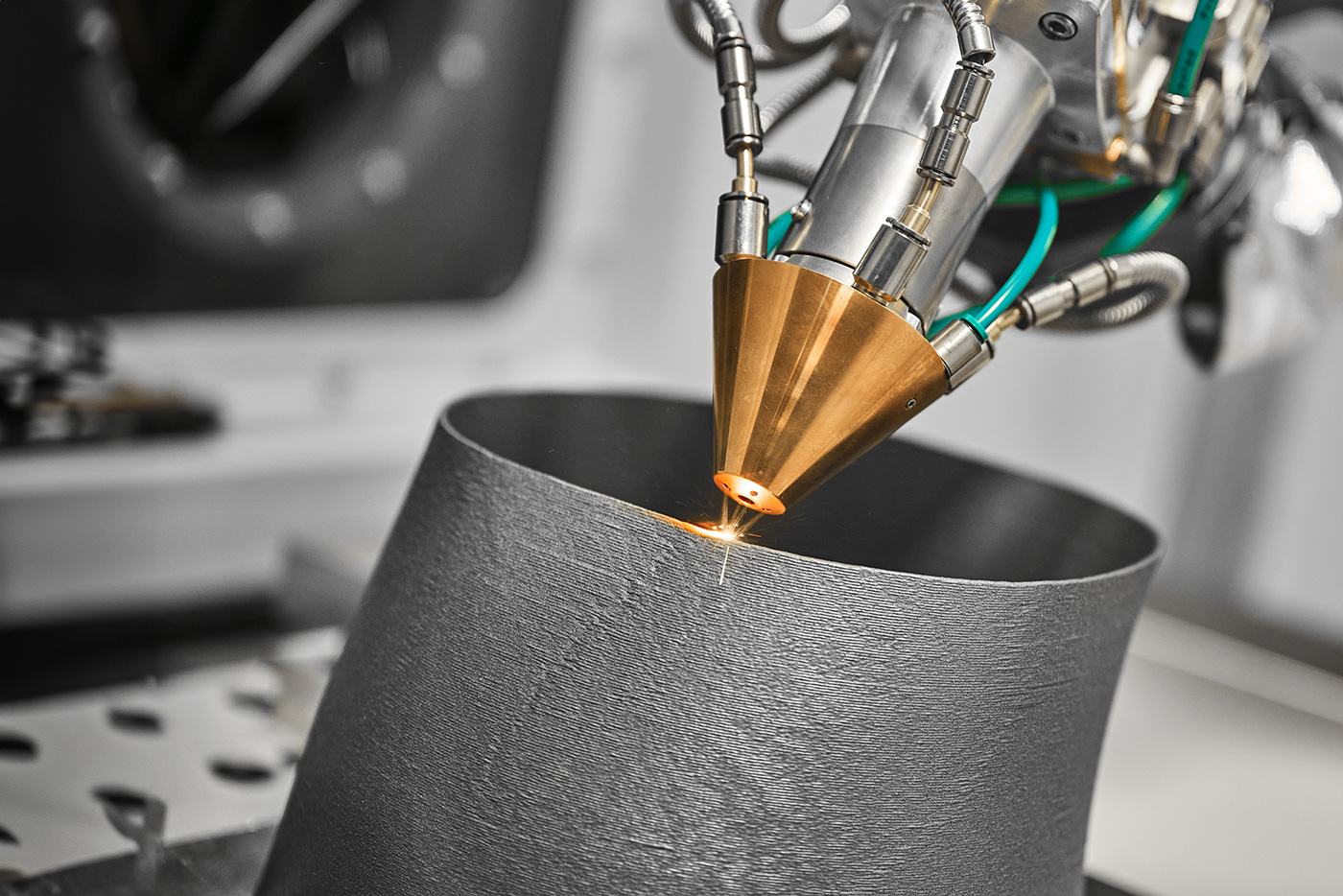
In the field of additive manufacturing Copper powder enables the production of complex component geometries with a high degree of precision. Using modern 3D printing techniques, it is possible to manufacture components that would be difficult to produce using traditional manufacturing methods.
Typical benefits:
- Great design freedom for complex geometries
- Material-efficient manufacturing
- Shorter development times
- Optimised thermal conductivity of finished components
For particularly fine textures, the following are often used ultra-fine copper powder such as UF2, UF3 or UF5.
Electronics and printed circuit boards
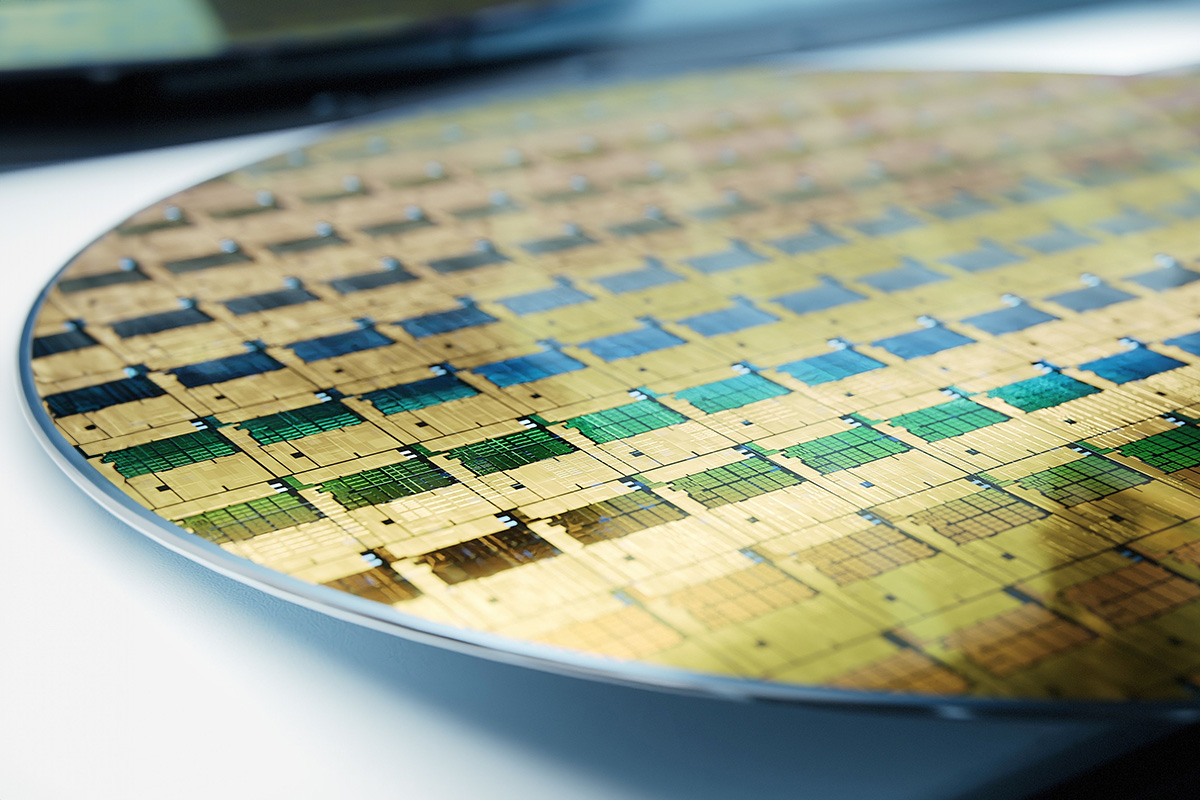
In the Electronics and semiconductor technology Copper powder is valued for its high electrical conductivity. Among other things, it is used as a raw material for printed circuit boards, electronic components and specialised applications with high signal transmission requirements.
Key requirements in this area are:
- High material purity
- Uniform particle size distribution
- Consistent batch quality
- Minimised oxidation
Surface coatings
Copper powder is also used in various coating processes. The aim is often to specifically improve the electrical conductivity, wear resistance or heat dissipation of components.
The benefits include:
- Improved surface properties
- Extended service life of components
- Optimised electrical contact surfaces
- Improved heat transfer
Thermal management and cooling systems
Thanks to its excellent thermal conductivity, copper powder is increasingly being used in modern cooling and thermal management solutions. This includes applications in power electronics, electric mobility and industrial power supply.
Typical areas of application include:
- Heat sink
- Heat exchanger
- Power electronics
- Battery and energy storage systems
The requirements for the powder used vary considerably depending on the application. Therefore, when making a selection, one should consider not only the material and price, but also technical parameters such as particle size distribution, purity and flow properties. We will examine which factors are particularly important in more detail in the next section.
Copper powder for additive manufacturing: requirements and selection criteria
Additive manufacturing has fundamentally transformed the development and production of complex components. Copper is becoming an increasingly important material, particularly in applications that require high electrical or thermal conductivity.
However, not all copper powders are equally suitable for use in additive manufacturing processes. Even slight differences in particle size distribution or grain structure can have a direct impact on component quality and process stability.
Why particle size distribution is crucial for 3D printing
One of the most important properties of copper powder for additive manufacturing is its particle size distribution. Among other things, it influences:
- The quality of the coating during the printing process
- Component density after processing
- The surface quality of the finished component
- The attention to detail complex geometries
The particle size of a metal powder has a significant influence on its processing properties and the quality of the resulting component. Depending on the application, different particle sizes may be required to achieve optimal results. For further information on this topic, please refer to our technical article on Particle size of metal powders.
Ultra-fine copper powders are frequently used, particularly for intricate structures and delicate component contours. Thanks to their fine particle structure, they enable more precise processing and a higher resolution in the final component geometry.
Flow behaviour and layer formation in additive manufacturing processes
In addition to particle size, flow behaviour plays a crucial role. The powder must be distributed evenly throughout the process to ensure a homogeneous coating.
Inappropriate flow behaviour can lead to the following problems, amongst others:
- Uneven layers of powder
- Porosity in the component
- Variations in component properties
- Enlarged Committee
- Unstable production processes
That is why many manufacturers, when selecting their metal powders, specifically look for particle morphology that is as reproducible as possible and consistent batch quality.
What properties should copper powder for additive manufacturing have?
Requirements may vary depending on the manufacturing process and application. However, the following criteria play a key role in many projects:
- Defined particle size distribution
- High purity
- Good flowability
- Uniform grain structure
- Consistent batch quality
- Process reliability during processing
For applications with particularly high demands in terms of precision and attention to detail, NMD offers a range of ultra-fine copper powder These have been specially developed for demanding high-tech applications and are suitable for 3D printing, electronics manufacturing and other precision applications, amongst other things.
Alongside additive manufacturing, the electronics industry is one of the most important sectors for the use of copper powder. However, different requirements take precedence here, particularly with regard to conductivity, purity and particle size.
Copper powder for electronics and printed circuit boards
The electronics industry is one of the most important sectors for copper powder. Whether it be printed circuit boards, electronic components, sensors or applications in the Semiconductors and electronics – Thanks to its excellent material properties, copper is indispensable in numerous technologies.
Copper is in particularly high demand in situations where the reliable transmission of electrical power or signals is required. The metal’s high conductivity makes it suitable for use in demanding applications where precision and reliability are paramount.
High conductivity for electronic applications
Copper has one of the highest electrical conductivities of all engineering metals and is therefore ideal for electronic components and conductive structures.
The key benefits include:
- Excellent electrical conductivity
- Excellent thermal conductivity
- High reliability in continuous operation
- Good workability
- A tried-and-tested material in high-tech applications
These properties make copper powder an important raw material for modern electronic applications and innovative manufacturing technologies.
Copper powder for printed circuit boards and semiconductor technology
In printed circuit board manufacturing and semiconductor technology, the requirements for the powder used are particularly stringent. Even the slightest variations in particle size or purity can affect the quality and performance of the resulting components.
That is why the following criteria are often the focus here:
- High material purity
- Uniform particle size distribution
- Consistent batch quality
- Minimised impurities
- Controlled oxidation behaviour
The more precise the requirements for the end product are, the more important it becomes to select a suitable copper powder.
Requirements regarding precision and particle size
For particularly fine structures and high-precision applications, the following are often used ultra-fine copper powder are used. Thanks to their fine particle size distribution, they enable more consistent processing and facilitate the manufacture of complex components with tight tolerances.
Depending on the application, different grades of powder may be required. NMD offers a range of ultra-fine copper powders for this purpose:
- Ultrafine copper powder UF2 for maximum precision and the finest details
- Ultrafine copper powder UF3 as a well-rounded solution for a wide range of applications
- Ultrafine copper powder UF5 for applications where workability and cost-effectiveness are key
Which variant is best suited to your application depends, among other things, on the requirements regarding precision, conductivity, processing methods and cost-effectiveness. For this reason, technical specifications should be clearly defined before procurement.
Buying copper powder: key specifications you should be aware of
The choice of a suitable copper powder should never be based solely on price. In practice, technical specifications often determine whether a manufacturing process runs smoothly or whether it leads to quality issues, scrap and unnecessary additional costs down the line.
Particularly for applications in additive manufacturing, electronics or precision engineering, the key specifications should be clearly defined before procurement. This helps to avoid subsequent adjustments, complaints or production stoppages.
The most important selection criteria include:
- Particle size distribution
- Grain shape and morphology
- Material purity
- Flowability
- Oxidation behaviour
- Batch consistency
Particle size distribution: D10, D50 and D90 explained simply
Particle size distribution is one of the most important parameters to consider when purchasing copper powder. It describes the size distribution of the individual particles within a powder and influences numerous processing properties.
The following values are typically specified:
- D10 = 10 % of the particles are smaller than this value
- D50 = Median value of the particle size distribution
- D90 = 90 % of the particles are smaller than this value
These parameters influence, amongst other things:
- Flow behaviour of the powder
- Packing density
- Sintering behaviour
- Surface quality
- Precision of the components
The particle size distribution has a significant influence on how a powder behaves during processing and on the properties of the resulting component. If you would like to learn more about the influence of particle size on metal powders, you will find further information in our technical article on Particle size of metal powders.
Grain shape and morphology: spherical or irregular?
In addition to particle size, grain shape also plays an important role. Depending on the manufacturing process, metal powders can have different structures.
The most common forms include:
- Spherical particles for good flow and even application
- Irregular particles for specific applications and processes
- Lamellar particles for selected coating applications
- Spongy structures for specialised sintering applications
The optimal grain shape always depends on the subsequent processing method and the requirements of the end product.
Purity and its impact on performance
The purity of a copper powder has a direct impact on its electrical, thermal and mechanical properties.
Material purity plays a crucial role, particularly in the following areas:
- Electronics and printed circuit boards
- Semiconductor technology
- Precision components
- High-performance applications
Contaminants can reduce conductivity and compromise process stability. That is why purity requirements should be clearly defined at the enquiry stage.
Flowability for stable production processes
Flowability describes how evenly a powder moves and distributes itself within a manufacturing process.
Good flowability helps to:
- Homogeneous powder layers
- Stable production processes
- Reproducible results
- Reduced scrap rates
Particularly in automated processes and additive manufacturing, flowability is one of the most important quality characteristics of a metal powder.
Oxidation behaviour and storage stability
Copper reacts naturally with its surroundings when it comes into contact with oxygen and environmental factors. Depending on the application, its oxidation behaviour can therefore play an important role.
The following points should therefore be taken into account at the procurement stage:
- Storage conditions
- Packaging units
- Terms and Conditions of Carriage
- Planned storage period
- Surface quality requirements
By taking these factors into account at an early stage, it is possible to ensure the long-term quality of the copper powder and minimise risks in the subsequent production process.
However, even when all the technical specifications are known, one crucial question often remains unanswered: which powder grade is actually best suited to your specific application? This is precisely why it is worth making a direct comparison of the different ultra-fine copper powders UF2, UF3 and UF5.
Ultra-fine copper powder UF2, UF3 or UF5: the differences
Anyone looking to source copper powder for demanding applications in electronics, additive manufacturing or precision engineering is often faced with the question: what is the right particle size?
The answer depends on the requirements of the specific application. Whilst some processes benefit from particularly fine particles, in other applications factors such as flowability, workability or cost-effectiveness are the main considerations.
NMD offers various options for this ultra-fine copper powder which have been specially developed for a variety of applications.
The following overview will help you identify the right grade of powder for your application. We will then present the individual grades—UF2, UF3 and UF5—in detail.
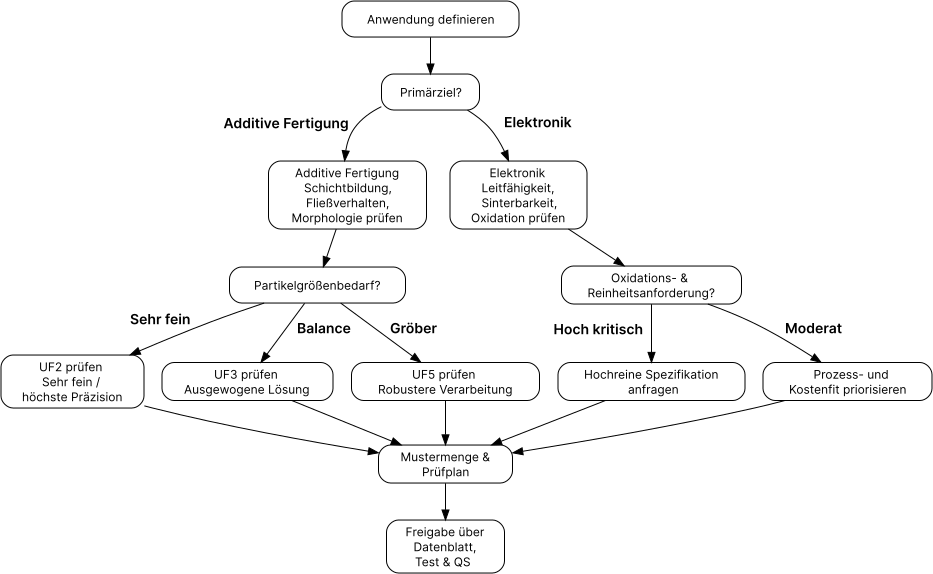
UF2 ultra-fine copper powder for maximum precision
The Ultrafine copper powder UF2 has a particularly fine particle size distribution of 1.0 to 2.0 µm and is suitable for applications requiring the highest precision.
Typical benefits:
- Very fine particle structure
- High level of detail
- Suitable for delicate structures
- High electrical and thermal conductivity
UF2 is frequently used for high-precision applications in electronics, printed circuit board technology and additive manufacturing.
UF3 ultra-fine copper powder: a well-rounded all-rounder
The Ultrafine copper powder UF3 offers a good balance between precision, workability and cost-effectiveness.
It is particularly suitable for companies that:
- have to meet high quality standards
- require processes that are consistent at all times
- Prefer a balanced particle size
- I would like to use a single powder for various applications
UF3 is frequently used in applications where both precision and process reliability are required.
UF5 ultra-fine copper powder for heavy-duty industrial applications
The Ultrafine copper powder UF5 has a coarser particle structure and is particularly suitable for applications where good workability and cost-effectiveness are key considerations.
The benefits include:
- Good flowability
- Consistent processing properties
- High process reliability
- Cost-effective solution for industrial applications
UF5 is often the right choice when the priority is not so much maximum detail but rather a robust and efficient manufacturing process.
Which option is ultimately the best choice depends on factors such as component geometry, manufacturing processes, quality requirements and budget. It is therefore advisable to clearly define the technical requirements before procurement and to compare different powder grades.
Comparison table: UF2, UF3 and UF5 side by side
The following overview is intended to provide an initial guide to selecting the right ultra-fine copper powder. Which variant is best suited to your application ultimately depends on the technical requirements of your manufacturing process.

Tip: If you are unsure which particle size is suitable for your application, we will be happy to help you choose. It is often not the finest powder quality that determines the best result, but rather the optimal balance between the powder, the manufacturing process and the end application.
What information should you ask the supplier for?
Many of the challenges encountered during subsequent processing are not caused by the metal itself, but by incomplete or unclear specifications at the procurement stage. The more precisely the requirements are defined at the enquiry stage, the easier it is to select the right copper powder.
Particularly when it comes to applications in electronics, additive manufacturing or precision engineering, the key technical requirements should be defined at an early stage. This helps to avoid queries, mispurchases and unnecessary rounds of prototyping.
The 7 most important parameters for purchasing copper powder
Please include the following information in your enquiry where possible:
- Particle size distribution (e.g. D10, D50, D90)
- Purity of the material
- Grain shape or morphology
- Flowability
- Bulk density
- Packaging and container sizes
- Requirements regarding batch consistency and documentation
In addition, other criteria may be relevant depending on the application. These include, for example, specific requirements regarding electrical conductivity, oxidation behaviour, storage conditions or the further processing of the powder.
The more detailed the technical requirements are, the more accurately a supplier can recommend suitable powder grades and suggest appropriate alternatives.
However, even when all the technical specifications are known, avoidable mistakes are often made when selecting copper powder. The next section explains what these mistakes are and how you can avoid them.
Common mistakes when selecting copper powder
Selecting a suitable copper powder is often more complex than it appears at first glance. In practice, it is frequently the case that it is not the material itself, but rather an inadequate definition of the requirements, that leads to problems later in the manufacturing process.
The following errors are among the most common causes of quality issues, unnecessary costs and production delays.
Mistake 1: Focusing solely on the price
The lowest price per kilo is not necessarily the most cost-effective solution. If a copper powder is chosen that is not ideally suited to the application, the subsequent costs can quickly end up being significantly higher.
Possible consequences:
- Higher Committee
- Unstable processes
- Additional rework
- Delays in production
What matters is the overall cost, not just the purchase price.
Mistake 2: Underestimating particle size
Particle size influences numerous properties of a metal powder and should therefore always be tailored to the specific application.
An unsuitable particle size distribution can affect:
- Flow behaviour
- Surface quality
- attention to detail
- Sintering behaviour
- Process stability
You can find further information on this in our technical article on Particle size of metal powders.
Mistake 3: Failing to define purity requirements
Material purity can play a crucial role, particularly in applications within the electronics or precision engineering sectors.
If purity requirements are not clearly defined, this can lead to undesirable variations in material properties.
This applies in particular to:
- Electrical conductivity
- Thermal conductivity
- Workability
- Quality of the end product
Mistake 4: Not giving the application sufficient consideration
A copper powder that delivers optimal results in one application is not necessarily suitable for other processes.
The following points should therefore be taken into account when making the enquiry:
- Processing method
- Component geometry
- Quality requirements
- Quantities
- Requirements regarding conductivity or heat dissipation
The more precisely the application is described, the more accurately the appropriate copper powder can be selected.
Mistake 5: Skipping the sampling process
Even if all the technical specifications are available, it is often advisable to request samples before proceeding with bulk procurement for demanding applications.
Early testing can help:
- to optimise process parameters
- to reduce risks
- To confirm the suitability of the powder
- To avoid costs later on
Particularly when it comes to new applications or product development, prototyping can provide valuable insights and make decision-making easier.
Frequently asked questions about copper powder (FAQ)
The right copper powder saves time, money and reduces waste
Copper powder is one of the most versatile materials for modern industrial applications and is used today in fields such as additive manufacturing, electronics, semiconductor technology and precision engineering. However, the requirements for the powder used vary considerably depending on the application.
Anyone wishing to achieve stable processes and high-quality results in the long term should therefore not only focus on the material itself, but also take into account the technical properties of the powder. Factors such as Particle size distribution, purity, particle shape and flowability have a direct impact on the processing and the quality of the final product.
Particularly when it comes to demanding applications, it is worth clearly defining the requirements before purchasing and comparing different grades of powder. This helps to avoid making the wrong purchase, production problems and unnecessary follow-up costs.
With the ultrafine copper powders UF2, UF3 and UF5 NMD offers solutions for a wide range of requirements – from high-precision electronic applications to industrial manufacturing processes, with a focus on cost-effectiveness and process reliability.
The best quality powder is not necessarily the finest or most expensive option, but the one that is best suited to your application.
If you need help choosing the right copper powder, or if you have specific requirements regarding particle size, purity or processing, the team at NMD will be happy to assist you, drawing on their many years of experience in the procurement of metal powders.